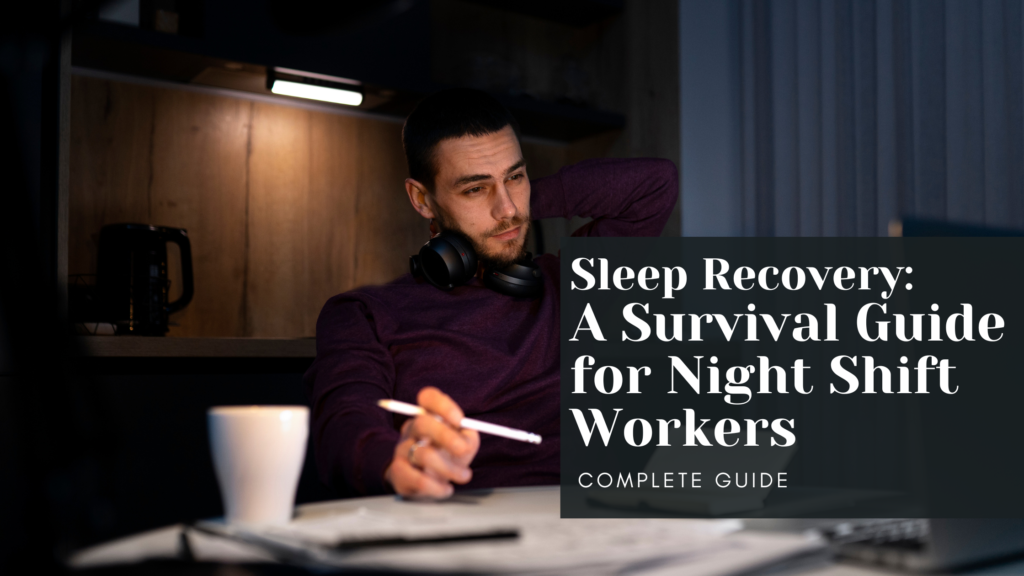
Sleep Recovery: A Survival Guide for Night Shift Workers
Sleep Recovery for Night Shift Workers: What Actually Helped Me Feel Human Again
If you work night shifts, you already know the struggle.
You come home exhausted, but sleep doesn’t come easily. The sun is bright, the house is noisy, and your mind refuses to switch off. Even after sleeping for hours, you wake up feeling heavy, unfocused, and drained.
I learned the hard way that for night-shift workers, sleep is not just about hours—it’s about recovery.
That’s why learning how to recover sleep efficiently is a game-changer.
What Sleep Recovery Really Means
Sleep recovery is about making the sleep you get work harder for you.
Instead of stressing about 8 uninterrupted hours, the focus shifts to:
- Falling asleep faster
- Spending more time in deep, restorative sleep
- Letting the nervous system fully relax
Even shorter sleep can feel refreshing when recovery improves.
You can also check my another blog about Mobile Phone Impact on Sleep Quality: Why Night Phone Use Ruins Your Sleep
How to Recover Sleep in Less Time (Night-Shift Friendly Methods)
1. Create a “Fake Night” Environment
Your brain sleeps best in darkness.
- Use blackout curtains or thick drapes
- Wear an eye mask if needed
- Block noise with earplugs or white noise
- Keep your room cool (around 18–22°C)
Darkness boosts melatonin, helping you fall asleep faster and deeper—even during the day.
2. Master Strategic Napping
Short naps can save your energy without ruining your main sleep.
- 20–30 minutes before work boosts alertness
- 90 minutes allows a full sleep cycle (great on off days)
- Avoid long naps close to your main sleep time
Smart naps reduce fatigue and improve reaction time during night shifts.
3. Use Light to Reset Your Body Clock
Light is a powerful signal for your brain.
- Bright light during your night shift helps you stay alert
- Wear sunglasses when returning home in the morning
- Keep your sleep area dark after work
This limits confusion in your internal clock and improves daytime sleep.
4. Calm Your Nervous System Before Sleep
Night shifts overstimulate your brain.
Before sleeping:
- Do slow breathing (4-6 breaths per minute)
- Try a 5-minute body scan or meditation
- Avoid intense phone scrolling
Calming your nervous system helps you fall asleep faster and reduces stress-related awakenings.
5. Eat for Sleep Recovery
What you eat affects how well you rest.
- Avoid heavy, greasy meals before sleep
- Choose light foods with protein and complex carbs
- Limit caffeine 6 hours before sleep
Proper nutrition supports hormone balance and deeper recovery sleep.
Benefits of Sleep Recovery Techniques
When night-shift workers improve sleep recovery, the results are noticeable:
- More energy with fewer hours of sleep
- Better focus and decision-making at work
- Improved mood and stress control
- Reduced cravings and weight gain
- Stronger immunity and fewer sick days
- Faster physical and mental recovery
You don’t just feel less tired—you feel more like yourself again.
Final Thoughts
Night shifts are tough, but exhaustion doesn’t have to be your normal.
Sleep recovery isn’t about chasing perfect routines. It’s about working with your reality, protecting your health, and giving your body what it needs to heal—even in short windows of rest.
Small changes, done consistently, can restore your energy, clarity, and well-being. Your sleep may look different from others—but it can still be powerful.
✅ Quick Sleep Recovery Checklist (Reader-Friendly)
Save or Screenshot This
✔ Dark, cool, and quiet sleep environment
✔ Blackout curtains or eye mask
✔ White noise or earplugs
✔ Sunglasses when coming home after night shift
✔ Limit caffeine 6 hours before sleep
✔ Eat light before sleeping
✔ 5–10 minutes of deep breathing or relaxation
✔ 20–30 minute power nap if needed
✔ Consistent sleep routine (even on off days)
According to Mayo Clinic, night work can disrupt the body’s natural sleep–wake cycle, leading to delayed sleep phase and poor recovery: