
Mobile Phone Impact on Sleep Quality: Why Night Phone Use Ruins Your Sleep
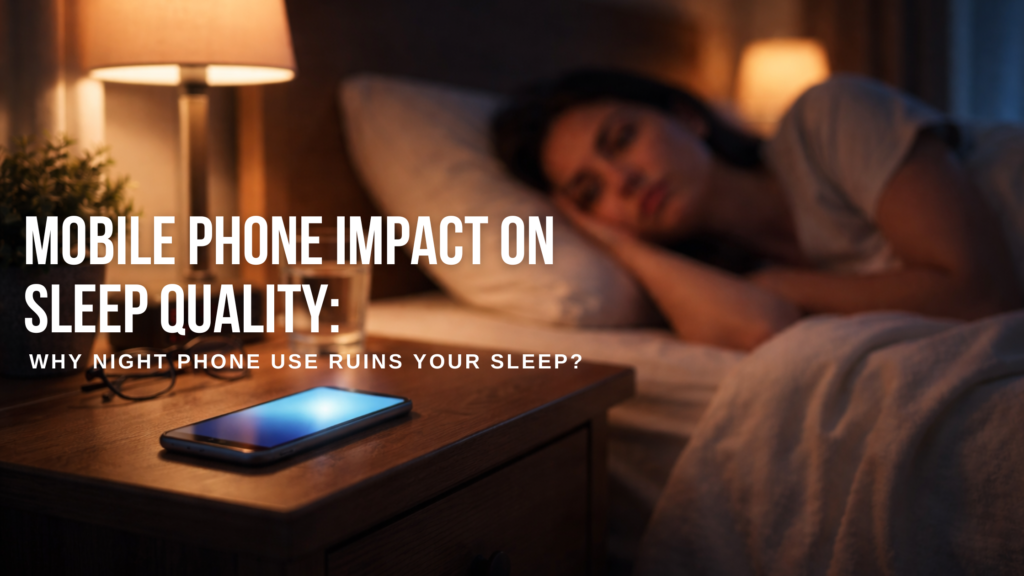
If you struggle to fall asleep even when your body feels tired, you’re not alone.
Over the years, I’ve noticed a common pattern in people who complain of poor sleep — their nights don’t begin with rest, they begin with a phone screen.
What feels like harmless scrolling often has deeper effects on the brain, hormones, and overall sleep quality. And the damage usually happens quietly, night after night.
Let’s look at what’s really going on.
How Mobile Phones Disrupt Natural Sleep Rhythm
Blue Light Interferes With Melatonin
Mobile phone screens emit blue light, which directly affects melatonin — the hormone responsible for initiating sleep.
Melatonin normally rises after sunset, signaling the brain that it’s time to rest. Exposure to blue light late at night suppresses this signal, making the brain believe it’s still daytime.
Even 20–30 minutes of screen exposure close to bedtime can delay sleep onset and reduce sleep depth.
Mental Stimulation Keeps the Brain Alert
Scrolling is not passive. Every notification, reel, message, or headline activates the brain.
This stimulation increases alertness-related chemicals like cortisol and dopamine, which are the opposite of what your body needs before sleep.
That’s why people often say:
“I’m sleepy, but my mind won’t slow down.”
This mental overactivity directly affects sleep quality.
Reduced Deep Sleep and More Night Awakenings
Quality sleep isn’t just about hours — it’s about cycles.
Late-night phone use:
- Delays the start of deep sleep
- Reduces total deep sleep duration
- Increases micro-awakenings during the night
As a result, people wake up feeling unrefreshed, even after 7–8 hours in bed.
The Impact on Working Professionals
For working professionals, night phone use is especially damaging.
Many people carry work stress into bed through emails, Slack messages, or late-night planning. The brain never fully switches off.
This leads to:
- Slower reaction time at work
- Reduced concentration and memory
- Increased dependence on caffeine
- Lower emotional patience during meetings
Over time, poor sleep affects productivity, decision-making, and stress tolerance — often without people realizing sleep is the root cause.
Broken Sleep From Notifications and Alerts
Even if you fall asleep while scrolling, notifications continue to interrupt your sleep cycles.
Each vibration or sound briefly activates the brain, pulling it out of deeper sleep stages.
You may not remember waking up, but your nervous system does.
This results in:
- Light, fragmented sleep
- Morning fatigue
- Mood fluctuations
Keeping the phone near the pillow makes this worse.
Real-Life Routine That Slowly Ruins Sleep
A very common night routine:
Dinner around 8:30–9 pm
Scrolling till 11 or later
Lights off, but mind still active
Sleep feels shallow
Morning feels rushed and heavy
This routine becomes habitual, and poor sleep starts to feel “normal.”
How Poor Sleep Affects Overall Health
Consistently poor sleep caused by late-night screen use can contribute to:
- Increased sugar cravings
- Reduced insulin sensitivity
- Weight gain
- Higher stress levels
- Poor recovery from daily fatigue
Sleep plays a critical role in metabolic balance, hormone regulation, and emotional stability.
Practical Ways to Reduce Phone Impact on Sleep
You don’t need drastic rules — just intentional habits.
Set a Clear Cut-Off Time
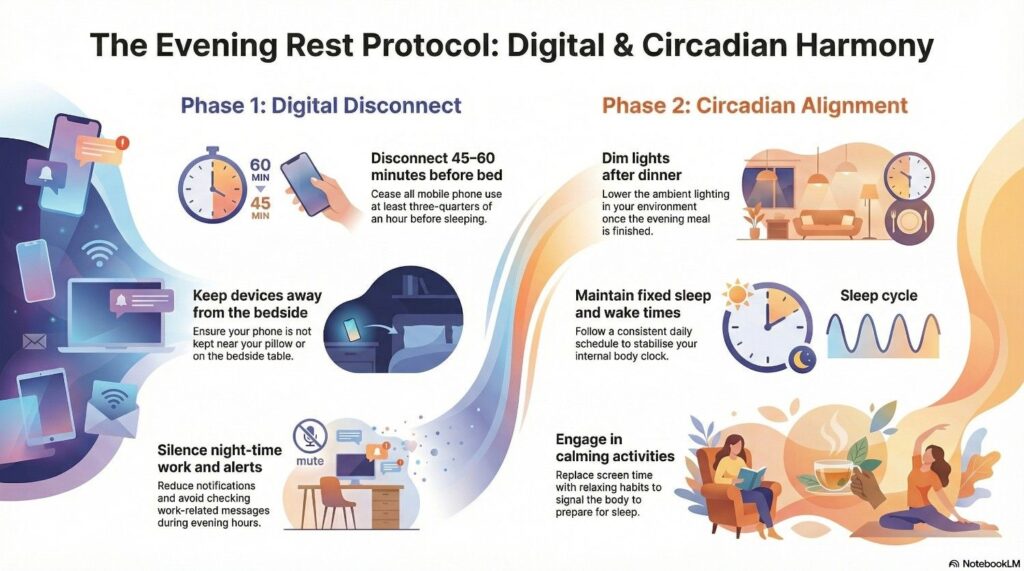
Aim to stop phone use 45–60 minutes before bedtime.
If that feels difficult, start with 20–30 minutes and increase gradually.
Dim Lights and Screens After Sunset
Lower room lighting after dinner.
If you must use your phone:
- Reduce brightness
- Avoid stimulating content
- Skip news and social media
Remember, night mode helps a little — but doesn’t solve the problem.
Replace Scrolling With a Wind-Down Ritual
Your brain needs a signal that the day is ending.
Simple options:
- Light stretching
- Reading a physical book
- Writing tomorrow’s to-do list
- Slow breathing for 3–5 minutes
- Soft music or prayer
Consistency matters more than perfection.
Quick Sleep Improvement Checklist (Save This)
✅ Stop phone use 45–60 minutes before bed
✅ Keep phone away from pillow or bedside
✅ Dim lights after dinner
✅ Avoid work messages at night
✅ Follow a fixed sleep and wake time
✅ Use calming activities before sleep
✅ Reduce notifications during night hours
You can also check my another blog about – Sleep Recovery: A Survival Guide for Night Shift Workers
Even following 4–5 of these consistently can significantly improve sleep quality within weeks.
Frequently Asked Questions (FAQ)
Q1. Is short phone use before bed okay?
Occasionally, yes. Regular nightly use is what causes long-term disruption.
Q2. Does night mode fully protect sleep?
No. It reduces blue light but does not reduce mental stimulation.
Q3. Can poor sleep affect blood sugar?
Yes. Inadequate or fragmented sleep can affect insulin sensitivity and appetite regulation.
Q4. Is watching TV better than phone use?
Slightly better if watched from a distance, but still not ideal right before bed.
Q5. How quickly can sleep improve?
Many people notice improvement within 7–14 days of consistent changes.
Gentle Disclaimer
This article is for general educational purposes and reflects lifestyle-based observations. It does not replace professional medical advice. If you experience persistent sleep issues, consult a qualified healthcare professional.