Belly Fat After 30: Why It Happens and How to Lose It Naturally
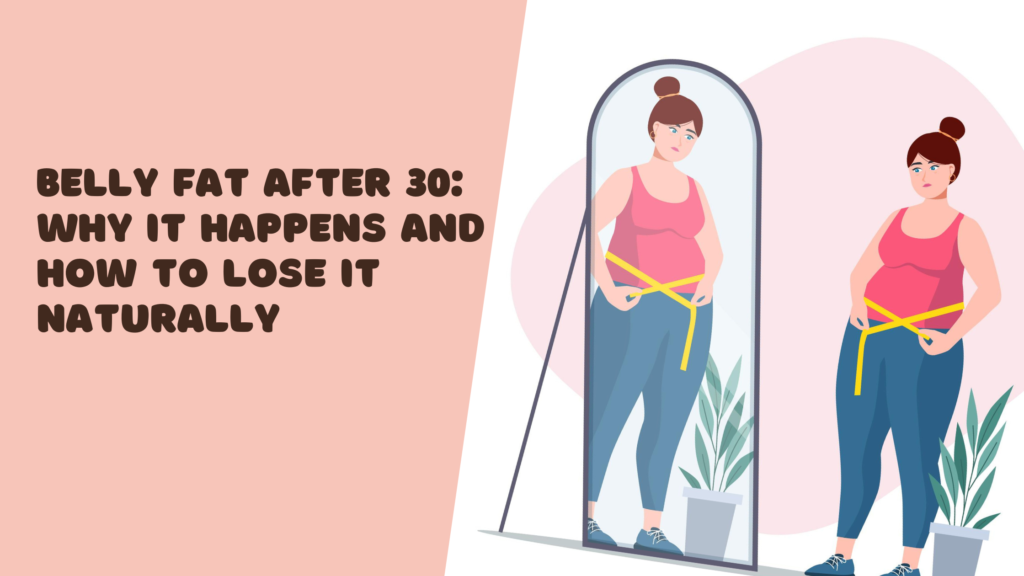
If you’re over 30 and struggling with belly fat, I want to say this: you’re not alone, and you’re not failing.
I remember the moment it hit me. The scale hadn’t changed much, but my waist had. My clothes fit differently. I felt more tired than usual. No matter how many sit-ups I did or how many “good eating days” I had, the belly fat wouldn’t budge.
For a long time, I blamed myself. I thought I wasn’t disciplined enough or consistent enough. But the truth is, belly fat after 30 isn’t just about willpower. Our bodies change with age; our hormones, metabolism, stress levels, and lifestyle all shift. Once I understood that, things became easier to approach calmly and realistically.
Here’s what I’ve learned from my own experience and from the science behind it.
Why Belly Fat Becomes More Common After 30
After 30, the body simply doesn’t work the way it used to. I didn’t want to accept that at first, but it’s real and normal.
Here’s what’s happening:
- Metabolism slows down, even if only slightly.
- Muscle mass starts decreasing if we’re not actively strength training.
- Hormones shift, affecting where and how fat is stored.
- Stress levels often increase due to work, family, and responsibilities.
- Sleep quality usually suffers.
What I realized was this: even though my eating habits hadn’t changed much, my body had. That meant my old strategies wouldn’t work anymore.
That’s why losing belly fat after 30 feels so much harder than it did in my 20s.
Not All Belly Fat Is the Same
One thing that changed my perspective on belly fat was learning that not all belly fat is the same.
There are two main types:
- Subcutaneous fat – the soft fat just under the skin.
- Visceral fat – the deeper fat stored around internal organs.
Visceral fat is linked to health problems like heart disease, insulin resistance, and chronic inflammation. That’s when I stopped seeing belly fat as just a cosmetic issue and began viewing it as a health signal.
This mindset shift made a big difference for me. It made motivation feel healthier and far less punishing.
Lifestyle Habits That Cause Belly Fat After 30
Honestly, belly fat didn’t come from one big mistake. It came from many small, everyday habits that felt normal.
Things like:
- Sitting for long hours.
- Being mentally “on” all the time.
- Sleeping late and waking up tired.
- Relying on convenience foods more than I realized.
- Using alcohol as a way to relax.
None of these felt extreme alone. But together, they created the perfect environment for belly fat to appear and stick around.
What surprised me most was how much stress and sleep affected everything.
Diet Mistakes I Made
For a long time, I thought eating less was the solution.
It wasn’t. Some common mistakes I made, which I see many others make too:
- Skipping meals and then overeating later.
- Cutting carbs too aggressively.
- Not eating enough protein.
- Eating late at night without realizing how often.
- Ignoring digestion and gut health.
What worked better for me was eating balanced meals. Enough protein, more fiber, mostly real food, and yes, enjoying food without guilt.
Supporting gut health also made a noticeable difference. I experienced less bloating, better digestion, and more energy—things many people mistake for “fat gain” when they’re not.
The Fitness Myths I Had to Unlearn. I wasted a lot of time believing things like:
“If I do more crunches, my belly will shrink.”
“Cardio is the only way to burn fat.”
“I just need to eat less.”
Here’s what I eventually learned:
- Spot reduction doesn’t work.
- Too much cardio can increase stress hormones.
- Undereating actually slows your metabolism.
- After 30, the body responds far better to smart movement, not punishment.
- The Exercise Approach That Actually Helped
- Once I stopped chasing extreme workouts, everything started to change.
What helped me most was:
- Strength training a few times a week.
- Walking regularly (seriously underrated).
- Core exercises focused on stability, not endless crunches.
- Short, manageable cardio sessions.
I stopped trying to exhaust myself and started focusing on consistency. That shift alone made a huge difference.
Stress and Sleep: The Part No One Talks About Enough
This deserves its own section because it matters more than most people realize.
When I was constantly stressed, my belly fat wouldn’t budge – no matter what I ate or how much I exercised. Chronic stress increases cortisol, which encourages fat storage around the belly.
Poor sleep only made things worse:
More cravings
Less energy
Slower recovery
Once I prioritized sleep and found simple ways to manage stress-even small ones—I noticed changes much faster than I expected.
Poor sleep can quietly slow fat loss, this sleep recovery guide for night shift workers explains how to reset your sleep cycle and support a healthier waistline.
How Long It Really Takes to Lose Belly Fat After 30
I won’t sugarcoat it: belly fat doesn’t disappear overnight.
For most people, including me, noticeable changes take about 8 to 12 weeks of consistent habits. Progress doesn’t always show up on the scale immediately.
What I noticed first:
What I noticed first wasn’t a dramatic change on the scale-it was how I felt. I had more energy throughout the day and didn’t feel as drained by evening. My clothes started fitting more comfortably, even before my weight changed. I felt stronger during workouts and everyday tasks, and my sleep improved too—I was falling asleep faster and waking up feeling more rested. Those small wins showed me I was on the right track, even before the visible changes appeared.
The visual changes came later.
Habits That Made the Biggest Difference for Me:
If I had to narrow it down, it really came down to a few simple habits that I could stick with. I focused on moving my body every day, even if it was just a walk or some light stretching. I made sure my meals had enough protein and fiber to keep me full and energized. I stopped avoiding weights and started strength training regularly. Prioritizing good sleep and finding ways to manage stress before it took over also made a huge difference. Nothing about it was extreme-it was just about being consistent, and that’s what worked.
Final Thoughts: What I Wish I Knew Earlier
Belly fat after 30 isn’t a failure. It’s feedback.
Your body isn’t asking for stricter rules-it wants better care. Once I stopped fighting my body and started supporting it, fat loss became a side effect rather than an obsession.
If you’re facing belly fat after 30, be patient with yourself. Your body hasn’t turned against you. It just wants a smarter, kinder approach.